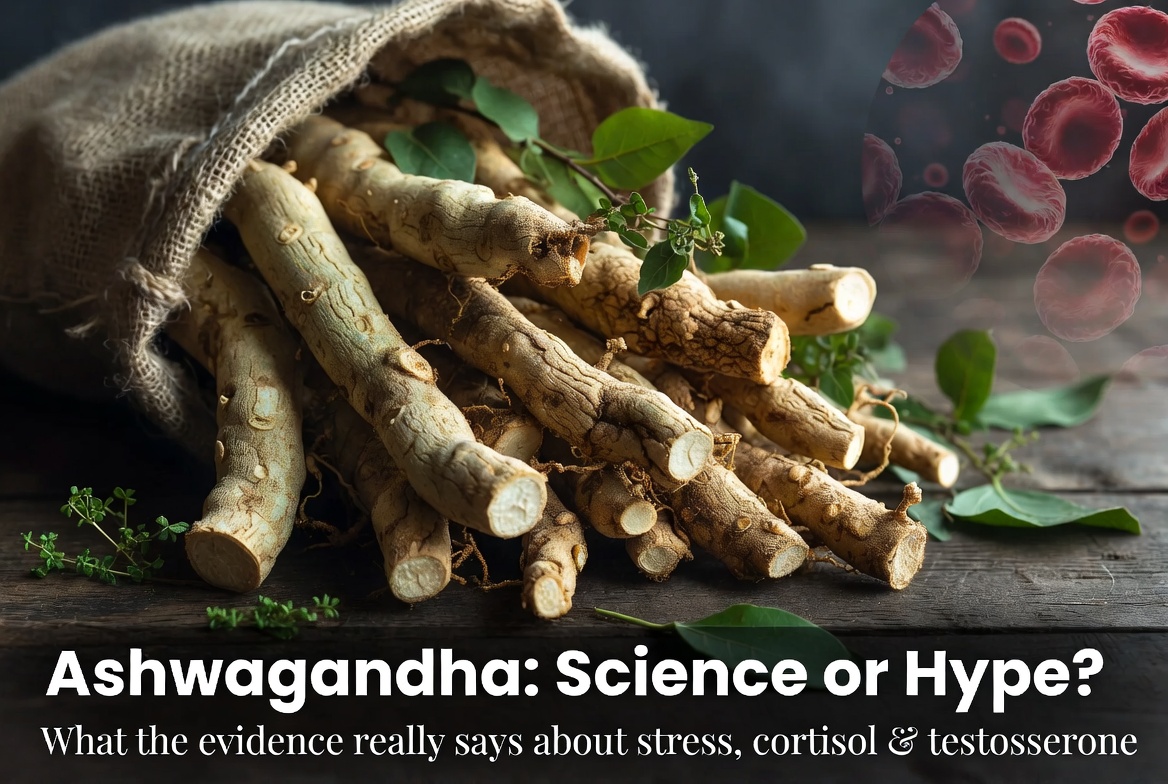
One herb. Over a billion views. And one question almost nobody is asking. Ashwagandha has become the internet’s favorite calm-in-a-capsule. The hashtag #ashwagandha has racked up more than 1.1 billion views on TikTok, and the global ashwagandha market — valued near $1.8 billion in 2024 — is projected to climb toward $6 billion by the mid-2030s. That is a staggering amount of attention for a root that has been used in Ayurvedic medicine for over 3,000 years.
But here is the question that matters: are we building real trust in natural medicine, or just unrealistic expectations? After more than 25 years around healthcare, I have come to one conclusion. The future does not belong to pharmaceuticals alone, and it does not belong to natural remedies alone. It belongs to evidence. So let’s look at what the science actually says about ashwagandha — the genuinely encouraging parts, and the parts that deserve a dose of humility.
What ashwagandha is — and why it’s called an adaptogen
Ashwagandha (Withania somnifera) is classified as an adaptogen: a plant thought to help the body adapt to stress and return toward balance. Its active compounds, called withanolides, are concentrated in standardized root extracts such as KSM-66 and Shoden. When you see research on ashwagandha, it is almost always one of these standardized extracts being studied — not raw powder of unknown strength. That distinction matters more than most marketing admits.
The strongest evidence: stress and cortisol
This is where ashwagandha earns its reputation. It is one of the most extensively researched botanicals in the world for stress, with more than 30 human clinical trials behind it.
- In a landmark randomized, double-blind, placebo-controlled trial, adults taking a high-concentration root extract saw serum cortisol fall by about 27.9% over 60 days, while perceived-stress scores dropped roughly 44% versus placebo.
- A 2025 systematic review and meta-analysis confirmed a statistically significant reduction in cortisol across studies (about −1.16 µg/dL; p < 0.001).
- Multiple trials report meaningful improvements in anxiety and overall wellbeing in adults under chronic stress.
Cortisol is your primary stress hormone. When it stays chronically elevated, it disrupts sleep, mood, metabolism, and hormones. A botanical that can measurably nudge it downward is genuinely worth paying attention to.
Sleep: a quietly impressive runner-up
A 2020 meta-analysis in PLoS ONE pooling five randomized controlled trials found ashwagandha significantly improved overall sleep quality, with the strongest effects in people with diagnosed insomnia. In one trial, 600 mg of root extract improved sleep onset, total sleep time, and sleep-quality scores over 10 weeks. Better sleep and lower cortisol tend to reinforce each other — which is likely part of why people feel the difference.
Testosterone: promising, but widely overstated
This is where the internet gets ahead of the evidence. Some studies do report modest testosterone increases — on the order of 10–15%, with one trial noting a serum rise of about 66.5 ng/dL — but almost always in specific groups: men with infertility, obesity, chronic stress, or lower baseline testosterone. The likely mechanism is indirect: chronic cortisol suppresses testosterone, so lowering cortisol can let testosterone recover.
That is very different from the viral claim that ashwagandha is a “natural testosterone booster” for every man. If your levels are already healthy, the evidence that ashwagandha pushes them meaningfully higher is thin. Honesty here protects both your wallet and your expectations.
“Natural” does not automatically mean “harmless”
Ashwagandha is generally well tolerated, but well tolerated is not the same as risk-free. Responsible use means knowing the limits:
- It can interact with medications, including sedatives, thyroid medication, immunosuppressants, and drugs for blood sugar or blood pressure.
- It may influence thyroid function (it can raise thyroid hormone levels) — a concern if you have a thyroid condition.
- It is not recommended in pregnancy, and is generally avoided while breastfeeding.
- People with autoimmune conditions or those preparing for surgery should be cautious.
- Rare reports of liver issues exist, almost always tied to unregulated or mislabeled products — another reason quality and standardization matter.
This is exactly why I believe in working with a qualified practitioner rather than self-prescribing from a viral video.
The bigger picture: from treating disease to preventing it
What excites me most isn’t ashwagandha itself — it’s what it represents. For decades, healthcare focused on treating illness after it appeared. Today the conversation is shifting toward prevention: helping people stay well, not just recover. That is where scientifically validated botanicals, nutrition, lifestyle medicine, and conventional care can complement each other rather than compete.
The future of healthcare is not nature or science. It is nature and science, integrated responsibly — through stronger clinical research, higher manufacturing standards, transparent communication, and honest consumer education. Because trust is built through evidence, and evidence ultimately improves lives.
Frequently asked questions about ashwagandha
Does ashwagandha actually lower cortisol?
Yes — this is its best-supported benefit. In controlled trials, standardized root extracts reduced serum cortisol by roughly 25–30% over 6–8 weeks, and a 2025 meta-analysis confirmed a significant overall reduction. Individual results vary.
Does ashwagandha increase testosterone?
Sometimes, modestly (around 10–15%), and mainly in men with stress, obesity, infertility, or low baseline testosterone. It is not a reliable testosterone booster for men whose levels are already normal.
How much ashwagandha should I take?
Most studies use 300–600 mg of a standardized root extract per day. The right dose and product depend on your health, medications, and goals, so check with a qualified practitioner before starting.
Is ashwagandha safe?
It is generally well tolerated, but it can interact with medications, affect thyroid function, and is not recommended during pregnancy. “Natural” does not mean risk-free — personalized guidance matters.
How long does ashwagandha take to work?
In trials, stress, cortisol, and sleep benefits typically appear over 4–10 weeks of consistent daily use, not overnight.
The bottom line
Ashwagandha is not hype — but it is not magic either. The science genuinely supports it for stress, cortisol, and sleep; it is more modest and more conditional for testosterone; and “natural” never means “skip the caution.” Used wisely, with good-quality standardized extracts and professional guidance, it is a strong example of evidence-based natural medicine done right.
Want a personalized, root-cause approach instead of guesswork? That is exactly what I do. Book a consultation to find out whether ashwagandha — or a different strategy — fits your body, or explore my Face, Tongue & Nail Analysis to see what your body may already be telling you.
This article is for educational purposes only and is not medical advice. Ashwagandha can interact with medications and is not appropriate for everyone, including during pregnancy. Always consult a qualified healthcare provider before starting any new supplement.
Please read this before acting on anything above. These are general suggestions, not directions; check each one against your current medications with your pharmacist or physician before taking anything.